If your home smells musty every time the heat or AC kicks on, mold may be growing inside your HVAC system or ductwork — and spreading spores through every room with each cycle.
How mold gets into HVAC systems
HVAC systems are moisture magnets:
- Condensation on cooling coils and in drain pans
- Damp ductwork in humid crawl spaces or attics
- Clogged condensate lines that overflow
- Poor filtration letting spores and dust accumulate
Once mold establishes inside the system, the blower distributes spores throughout your home.
Signs of mold in your ducts
- A musty or "dirty sock" smell when the system runs
- Visible dark growth around vents, registers, or the air handler
- Worsening allergies or asthma indoors
- Excessive dust or debris blowing from vents
- Moisture or condensation near the air handler
Why it matters for your health
Airborne mold spores are a known trigger for allergies and asthma. When mold grows inside ductwork, you're breathing a concentrated dose every time the system runs — often worse than mold on a single wall.
What remediation involves
- Inspection — camera inspection of ducts and the air handler, plus air sampling.
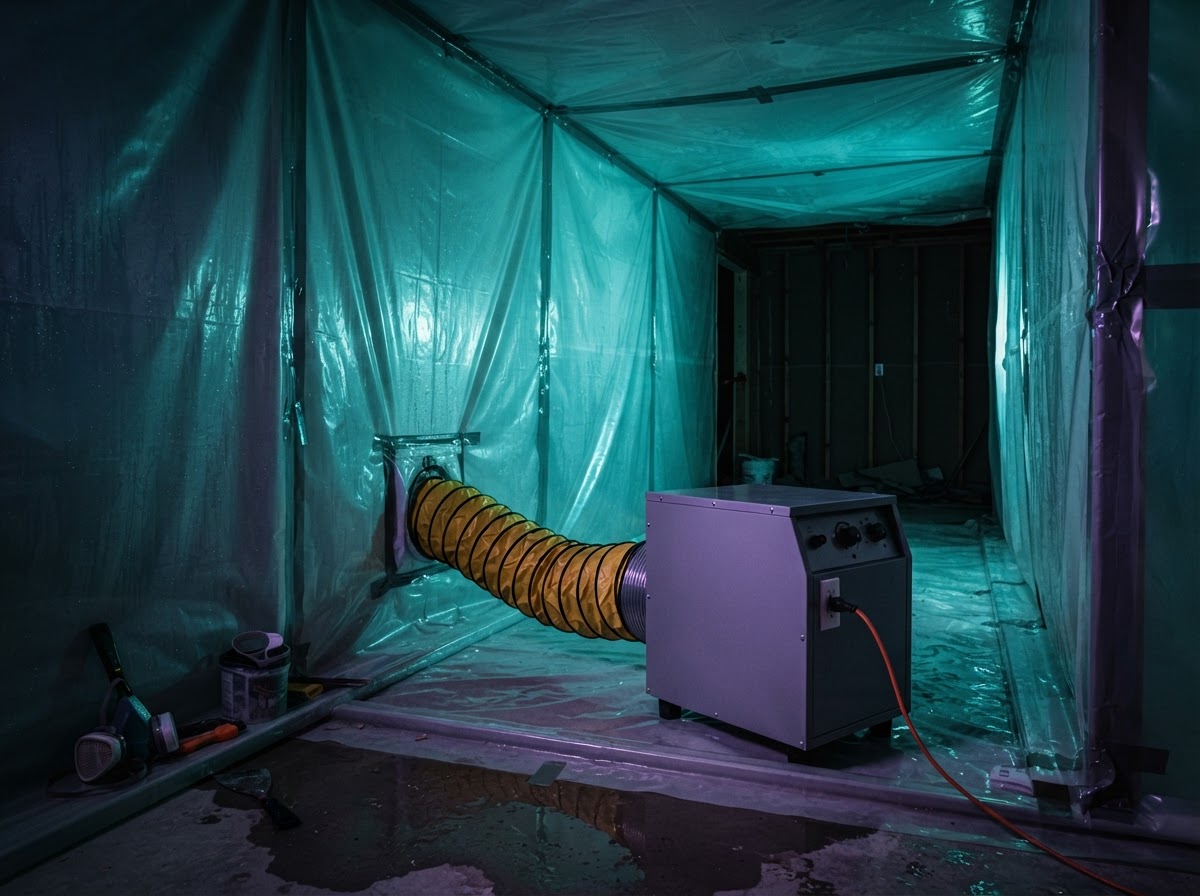
- Containment — seal vents and set up negative air pressure.
- Source correction — fix the moisture: condensate drainage, insulation, leaks.
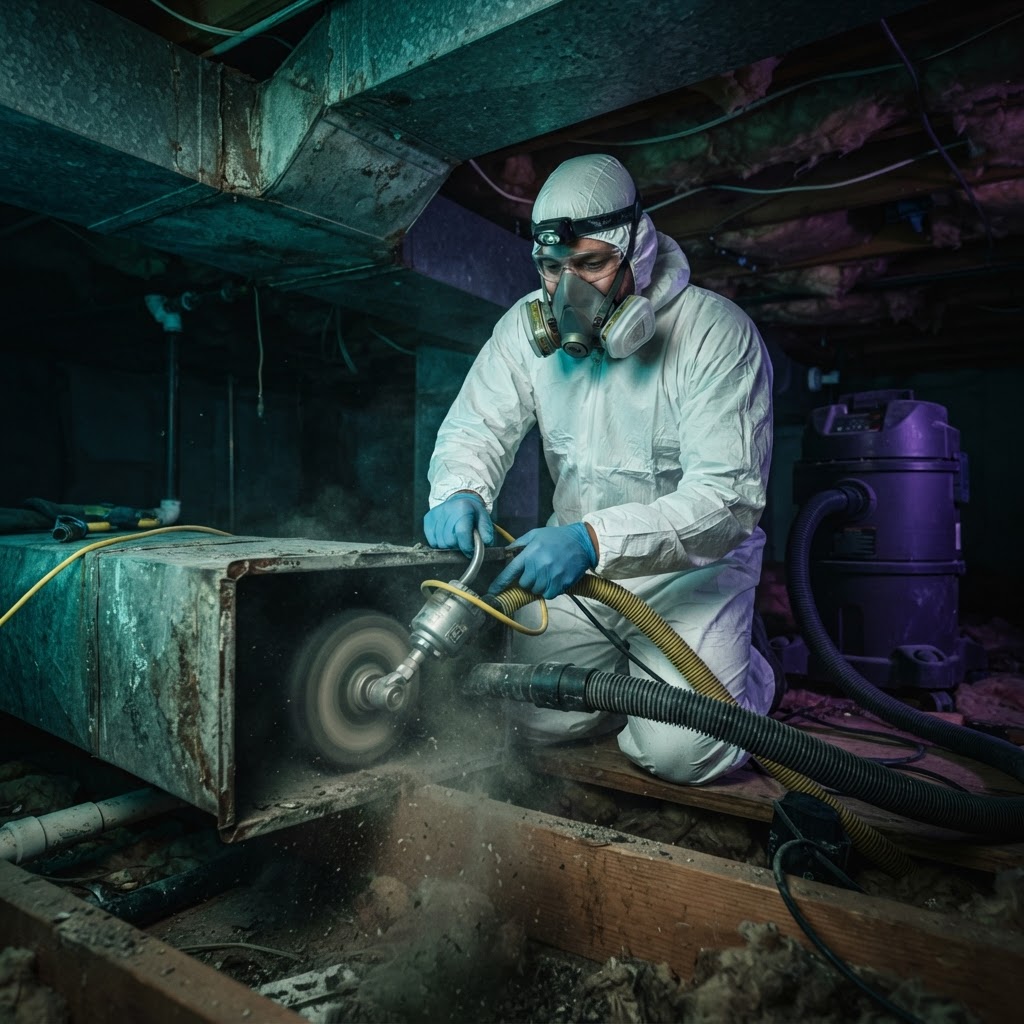
- Cleaning and sanitizing — HEPA-vacuum and treat ducts, coils, and components.
- Verification — post-remediation air testing to confirm clean air.
Can I just clean the vents myself?
Cleaning visible vents doesn't reach the mold growing deeper in the duct runs, coils, or insulation. Proper remediation requires specialized equipment and containment to avoid spreading spores.
Suspect your HVAC is the source? Call (844) 393-2902 for a free inspection and air quality assessment.